Wednesday, December 31, 2025

जिन्दगीको अर्थ वुझ्न नसकेर भैतारिरहेकाे थिए

जिन्दगीको अर्थ वुझ्न नसकेर भैतारिरहेकाे थिए विभिन्न अनाैठा प्रयास, प्रयाेगहरु गर्दै जिवन कस्तो हुनुपर्छ कसरी वाँच्ने भनेर पत्ता लगाउनु थियाे त्यसैले कहिले ध्यान कहिले अध्यान कतै भ्रमण र प्रश्नका चाङ लगाउदै गुरुहरु धाउदै थिए, सडक सुन्य थियाे हामि आफ्नै लयमा..... पेट्रोलकाे मुल्य २०० पुगेकाले हामी पैदल हिड्दै थियौं । मुल्य फिर्ता लिनुपर्ने अडान राख्दै मादि पार्टीको नेपाल वन्दकाे कार्यक्रम रहेछ । साथि भन्दै थियाे ग्यादरिङ् छ, कहिले मेसिन्जर, मिटअप, जुममा कुरा गर्ने समुहको प्रत्येक्ष भेटघाट रहेछ, मेरो साथी पनि सोही समुहको सदस्य रहेकोले छलफलमा सहभागी हुने मौका मिल्यो । स्थान  पृथ्वीनारायण क्याम्पस अगाडि भर्खरै खुलेको हाेटलकाे माथिल्लो तला रहेछ शान्त बाताबरण ........
नेताहरू प्राय प्रभावशाली देखिन उज्यालो चेहरा, चमक, मिलेको कपडामा देखिन चाहन्छन्  उ अगाडि थियो। परिचय आदानप्रदान प्रदान पछि सम्वाेधन गर्दै वाेल्याे। उ मेरो साथी थियोे, राजनीति प्रति खुब चासो लिने भएको विभिन्न नेताको नाम  लिएर महात्मा गान्धी, लेलिन, माओ के के  नाम सहित कार्यकाे प्रसंसा गर्दै भन्थो राजनीति देशकाे मुल निति हाे अझ भनौ नितिहरुकाे पनि निति सबै सचेत नागरिकले राजनीति गरेर देश बनाउनु पर्छ ।

 टाँठाे बाटो झट्ट हेर्दा केही परिवर्तन गर्छ जस्तो देखिने एक युवक बिचमा कुरा काट्दै बाेले उनि एक अनलाइन पाेर्टलमा काम गर्ने पत्रकार रहेछन् । भर्खरै पत्रकारिता छाडेर राजनीतिमा लागेका रवि लामिछानेकाे उदाहरण दिदै  खवरदारी गर्ने शैलीमा भने हामी सबै आफैमा पत्रकार हाै देशमा भएका खराब निर्णयको खबरदारी र राम्रो कामकाे प्रचार प्रसार गरेर समाधान गर्नु पर्छ । याे महान मानव धर्म हाे।
 
बाेलि भुईमा खस्न नपाउदै ठाडो शैलीमा जवाफ फर्काउदै भने आफ्नो लागि आफै गर्ने हाे, आफुत भलाे जगतै भलाे। शब्द सुन्दा लाग्याे साथि व्यापारी रहेछ। उसले क्रमश विनोद   चाैधरी, विलगेट्सकाे नाम पुकार्दै भन्याे सबै उत्पादनमूलक कार्यमा लाग्नु पर्छ । राेजगारी बढ्छ प्रतिव्यक्ति आए बढ्छ सबै सुखि हुन्छन् । हामीले चाहे सत्ता परिवर्तन हुन्छ धन देखेपछि महादेवका त तिन नेत्र खुल्छन भने भाेकाे पेट, चप्पल लगाएर क्रान्ति सुरु गर्नेलाई धनकाे प्यास नहाेला?

आफ्नो कुरा प्रति ध्यानाकर्षण गराउने शैलीमा  शब्द माथि शब्द थप्दै भने न्याय र अन्याय हाम्रो शब्द संग्रह हाे। मैले अहिले सम्म मुद्दा हारेको छैन । यसकाे अर्थ मैले सधैं न्यायकाे पक्षमा लडेको छु तपाईं मान्न सक्नुहुन्छ ! फेरि नेपालमा क्रमशः महाअभियाेग लाई उदाहरण दिदै शुशिला कार्की, चाेलेन्द्र संसेर जबरालाई उद्रित गर्दै भने कानुन कसरी चल्छ प्रधानन्यायाधीश माथिको अभियाेग  हेर्नु दिमाग धेरै चलाउनु पर्छ कानुन सबैभन्दा माथि छ। उनकाे तर्क सुनेपछि थाह भयाे उनि कानुनविद रहेछन् । 

हल्का कालो रंगकाे चस्मा अलिकति माथि सार्दै बाेल्न सुरु गरे , शिक्षक विश्व रेकर्ड राख्ने पेशा हैन, तर त्यहाँ सम्म पुग्ने प्रतिभा र प्रतिस्पर्धी उत्पादन भने पक्कै गर्छ। शिक्षक अन्धकार छल्न मानिसले प्रयाेग गरिरहेकाे मैन हाे। आफै सकिन्छ प्रकाश र ताप दुवै प्रयोग अनन्त सम्म गर्न सकिन्छ । एकछिन सन्नाठा छायाे, मैले विचार गरे उहाँ लेक्चर हुनुपर्छ ।

कुर्सीमा हातले धुन निकालदै नतमस्तक रहेका कलाकार रहेछन् , जिम्मेवार स्वभावमा खुट्टा हल्लाउँदै भने life is to short take a lot of enjoy। स्वच्छ आफ्नो भावना पाेख्ने हाे राम्रो गर्न सके सबैको हाई हाई, नसके वाई  माईकल ज्याक्सन आफ्नो समयमा विश्व हल्लाउँदै सर्वाधिक चर्चामा रहेर मरे। कलाकार नेता पनि हुन न्याय कर्ता पनि हुन साहित्यकार पनि हुन र विद्रोही पनि छन। उनले नेपालका बालेन र युद्धको नेतृत्व गरिरहेका जेलस्कि काे उदाहरण दिदै आफ्नो पेसाकाे सम्मान बढाय।

साईवावा जस्तै देखिने हलुका कपडा लगाउने व्याक्ति सफ्टवेयर ईन्जिनियर थिए। बेलावेला ल्यपटप चलाउदै गर्दाको आवाजले सबैकाे ध्यानाकर्षण गर्थो तर उनि देखेकाे नदेखे झैँ  गरेर वस्थे साथिले वाेलएपछि हतार गर्दै भने क्रिप्टाे करेन्सिले संसार खान्छ अव पैसाको ठाउँ यसले लिन्छ। मेटाभर्स , वेभ ३.०, वल्क चेन, ...यस्तै के के प्रविधिले विश्व साँघुरो हुदै गएको बताउदै  जुगर्वग, विलगेट्सकाे फाेटाे  फेस्बुकमा देखाउदै भन्यो टेक्नोलोजी विना विश्व असम्भव छ। एलाेन मस्क त तपाईंहरुले चिन्नु भएकै पात्र हाे।

छलफल सुरु भएदेखि नै भाेकाे आतिए जस्तो, टेवलमा चाेरि अउला टक टक टक टक गरेर टाेलाईरहेका उनि एलाेन   मस्क काे नाम सुने वितिकै वाेल्ने प्रताव गरे। आफुलाई वैज्ञानिक प्रति रुचि रहेको बताउदै। आवश्यकता आविष्कारकी जननि हुन खाेज अनुसन्धानले मानिसको दैनिक जिवन सहज हुदै जान्छ। भबिस्यमा हुने असल र खराब घट्ना बारे सहजै जानकारी लिन सकिन्छ । वेदर -फर्कास्ट, थन्डरस्टक, अर्थक्विक, बारे पुर्व जानकारी ले धेरै धनजनकाे क्षति हुन बाट बचाएका छन। आश्चर्य भावमा मंगल ग्रहवाट चन्द्रमा हुदै नाशा सम्म कुरा गरेपछि भने संसारकै महान वैज्ञानिक निकाेला टेस्ला लाई कसैले चिन्न सकेन । वैज्ञानिकहरु संच्चिकै महान हुन्छन् । संसारले जुगाै जुग चिन्छ। 

उनि थाेरै बाेले तर निकै भावनात्मक भाव प्रकट गर्ने शैलीमा भने, प्रकृतिले दिएको भन्दा धेरै खाेज्ने मनुष्यकाे महत्वकाङक्षी प्रवृत्तिकाे प्रतिफल तत्कालीन संघर्ष पुर्ण जिवन हाे। हामीले केहि नयाँ सृजना गर्ने प्रयास गर्ने हाे। सुन्दर जिवनकाे विनाश हैन, उनि नेपाली साहित्यका उदाउँदा लेखक रहेछन उनले क्रमश प्लेटाे, अरस्तु, दाँते, सेक्सपियर, देवकोटाकाे छाेटाे जिवनि र जानेजति स्लाे भन्दै मन वहकाउने शैलीमा आफ्नो पेशाकाे शिर उच्च गरे। 

सबैका तर्कहरु नतमस्तक भएर सुन्ने तर बाेल्न नखाेज्ने सान्त काेमल एकाग्र अनुहारमा निश्चल हाँसाे भएका व्याक्ति तर्फ साथिले ईसारा गर्दै भन्याे तपाईंको त परिचय पनि राम्रो संग सुन्न पाईएन नि? उनि मन्द मुस्का सहित बाेल्दै गए मेराे यथार्थ परिचय छैन तपाईंले देखिरहनु भएको शरिर आज्कल आफ्नै जस्तो लाग्छ। म आफुलाई अरु भन्दा फरक छु जस्तो लाग्दैन तर म तपाईंहरु जस्तो बन्ने चहना राख्दिन। सबै पेशालाई सम्मान गर्छु प्राप्त उपलब्धिकाे प्रयाेग गर्नुपर्छ भन्ने मान्यता राख्छु। कसैसँग माग्दिन दिएको लिन्छु मसंग बस्तुकाे मुल्य हुदैन सुन फलाम हिरा माटाे र पानि एउटै लाग्छ। सवै शुन्य । विगत संग अतृप्त चाहना र भबिस्यबाणी का सुन्दर महलमा कल्पना मेरो लागि सपना जस्तो लाग्छ तर स्पष्ट बर्तमन संग रमाउने स्वभाव छ। मानिसहरू आफ्नो तृष्णा मेटाउन प्रकृति संग प्रतिस्पर्धा मा जुटिरहेको देख्छु, आफु भित्र केहि नदेख्ने तर नाम प्रख्यात, अजर अमर हुने स्वार्थमा सबै शक्ति खर्च गरिरहेका छन। तपाईहरुले उदाहरण दिएका व्यक्तिहरुले उत्पादन गरेको ईनर्जिले अहिले सम्म पनि काम गरिरहेकाे छ। त्यसैले जिवनमा भौतारिरहनु पर्दैन सबै स्विकार्दै जानुकाे विकल्प छैन । उनि परिवार संगै वस्ने सन्यसी सन्त रहेछन मैले उनकाे कुरामा सहमति जनाउँदै तालि बजाए क्रमश सबैजना.... 
म बेकार सम्मानित पेशा खाेज्दै नाम कमाउने प्रख्यात बन्ने भाेकमा भाैतारी रहेकाे थिए सबैकाे भनाइ सुनेपछि लाग्यो आफ्नो कामकाे सम्मान गर्न जान्नु पर्ने रहेछ। 

Why Nepal’s Brightest Minds Are Leaving And What That Means for the Country’s Future


Why Nepal’s Brightest Minds Are Leaving  And What That Means for the Country’s Future

By Dolphin Sagar, Founder & CEO — Quantum Leaf AI Technology / Unver Tech

Nepal is experiencing one of the most dramatic youth migration waves in its history. Every year, hundreds of thousands of young Nepalis board planes to the Gulf, Malaysia, Europe, Japan, Korea, and beyond — searching for better work, stability, and opportunity. For many families, migration has become so normal that it feels like a natural part of growing up.

But behind this giant movement lies a quieter story: the steady outflow of educated, skilled, and ambitious people. Engineers. Nurses. Developers. Teachers. Technicians. The very people a developing nation needs most.

This is Nepal’s brain drain, and it’s reshaping the country’s economic future in ways that most headlines don’t capture.


The Hidden Reality Behind Youth Migration

On the surface, Nepal benefits massively from migration. Remittances make up 26–28% of the country’s GDP — one of the highest ratios in the world. These inflows support families, build houses, fund education, and keep the economy stable even during political and economic shocks.

But the deeper story is more complex.

  • Nepal issued 839,266 labour permits in 2023/24, the highest in history.

  • Around 71–74% of all migrants are aged 18–35 — the most productive age group.

  • Skilled migration has accelerated: nurses, doctors, IT graduates, and engineers are leaving faster than universities can replace them.

Economists often describe this as a “human capital leak,” but in Nepal, it’s becoming a human capital flood.


The Sectors Feeling the Shock

Some sectors are already showing visible cracks.

1. Healthcare

Nepal’s doctor-to-population ratio is 0.87 per 1,000 people, far below the WHO minimum of 2.3.
At the same time, 8,000+ nurses leave the country each year.
Hospitals face staff shortages, especially in rural districts where medical care is already thin.

A country cannot build a stable health system when the people who keep it running are leaving.

2. Education

Qualified teachers in science, math, and English are becoming harder to retain.
Rural schools face chronic vacancies, and turnover is high because teaching salaries cannot compete with foreign job opportunities.

The children who remain in Nepal are being taught by a shrinking workforce.

3. Agriculture

Districts with high out-migration report 15–20% drops in productivity.
Fallow land is increasing, and many farms are now run by elderly parents or seasonal workers.
Even though remittances come in, domestic food production weakens.

Nepal is slowly turning into a remittance-powered consumer economy — importing the goods it no longer produces.


The Emotional Side of Migration

Numbers don’t tell the full story.

Behind every permit issued is a conversation at a kitchen table.
A family selling land to pay a recruitment fee.
A young person choosing separation over uncertainty.
A skilled individual deciding that their talent will be valued more abroad than at home.

Migration is not just an economic decision — it’s a comment on how people feel about their future in Nepal.


Why Young Nepalis Want to Leave

After years of interviews, observation, and research, one answer appears again and again:

“There’s no future for my career here.”

Not because Nepal lacks talent.

But because our systems — political, educational, and economic — do not move at the speed talent requires.

Youth migrate because:

  • salaries are too low

  • career growth is slow

  • institutions are unstable

  • opportunity depends more on connections than skill

  • global markets value their work far more

For many young Nepalis, the real question isn’t “Should I migrate?”
It’s “Why stay?”


The Triple Drain Effect — A New Way to Understand the Crisis

While researching this topic, I arrived at a concept I call the Triple Drain:

1. Skill Drain

The departure of trained workers.

2. Fiscal Drain

Nepal invests millions in educating doctors, teachers, and engineers — and loses them before they contribute.

3. Productivity Drain

The economy loses the future innovation, services, and growth those workers would have created.

This triple effect is why brain drain is not just a social issue.
It’s a long-term development risk.


So What Can Nepal Do?

There’s no single solution, but several ideas could shift the trajectory:

1. Create real professional pathways in Nepal

Better salaries, clear career progression, and stronger institutions.

2. Encourage “Brain Circulation,” not just migration

Bring back experts through short-term contracts, diaspora networks, and remote work opportunities.

3. Reform service-bond systems for publicly funded education

Fair, flexible, and enforceable.

4. Invest in innovation ecosystems

Entrepreneurship, AI, technology, and modern industries give youth a reason to stay.

5. Make data-driven policy decisions

A modern labour-market information system can guide planning and prevent shortages.


A Final Thought: Migration Isn’t the Enemy — Stagnation Is

Migration has helped millions of Nepali families.
It built homes, paid for degrees, and kept the economy running when politics failed.

The problem isn’t that young people want to explore the world.
The problem is that Nepal does not yet offer a future strong enough to pull them back.

If the country can build systems that reward talent, protect professionals, and nurture innovation, then migration will not be a permanent loss. It will become an exchange — a circulation of ideas, skills, and global experience.

Until then, Nepal’s greatest minds will continue boarding flights with one hope:
A future they could not find at home.

Friday, October 17, 2025

Phoxing Village R&D Hub: A Reality-Based Proposal for Integrated Rural Innovation in Khilung Deurali, Syangja


Introduction and Background

Phoxing Village is located in Khilung Deurali, corresponding to Wards 6-7 of Bheerkot Municipality in Syangja District, Gandaki Province, Nepal. This mid-hill region experiences a subtropical to lower temperate climate depending on elevation and slope. Many farmers in Syangja are already cultivating citrus (especially oranges) on large scales. The district has expanded orange orchards to more than two thousand hectares under the Orange Superzone program, and in recent years Syangja has produced oranges worth over one billion Nepalese rupees. These facts show that high-value horticulture is already viable here, and that there is institutional support for horticultural expansion.

Electricity is present in many rural areas, and certain nearby places are served by internet service providers offering fiber or high-speed connectivity. There are agricultural extension services, cooperative groups, and local government bodies that have supported farmers through subsidies, training, and infrastructural programs. The Cooperative Act of Nepal (2074) provides legal infrastructure for cooperatives, and recent amendments and ordinances are strengthening cooperative regulation, including transparency, savings protection, and governance.

In Phoxing Village the terrain is hilly, slope gradients vary, soil conditions are mixed, and water availability is seasonal. Many households engage in subsistence farming, some cultivate cash crops, and traditional knowledge exists among farmers. But there is a gap between what is possible and what has been scientifically optimized; especially for new crops, post-harvest processing, digital agriculture, biodiversity, and combining tourism with agro-innovation.


Vision

The vision is to establish a fully non-profit research, development, and enterprise hub in Phoxing Village that integrates sustainable agriculture, climate-resilient research, digital tools and remote work training, biodiversity conservation, and community-led eco-tourism, operating under a legally registered cooperative which ensures shared ownership among the local residents. The model will be replicable and documented, and will aim for financial sustainability through sale of research, information, trainings, and income from tourism and value-added agricultural products. Abroad researchers are invited to collaborate, contribute expertise, and live in the hub with free accommodation; they only cover basic living expenses (food, clothing, travel) in support of shared, non-profit goals.


Research & Development Goals

These goals are grounded in local realities and existing institutional frameworks in Syangja. The R&D hub will focus on:

  1. Establishing baseline data in Phoxing for soil composition, micro-climate, water availability, slope and sun exposure. These data will guide which crops grow best in each micro-zone.

  2. Pilot trials of high-value cash crops suited to the location, likely including coffee, citrus (like oranges and lemons), avocado, and possibly indigenous fruit species. Trials will include testing different varieties, shade levels, fertilizer inputs, and organic or low-chemical methods.

  3. Post-harvest processing research so that value is added locally: for example better drying, storage, packaging, quality grading so that fruit or coffee can fetch higher prices.

  4. Biodiversity and ecosystem services research: mapping insect pollinators and pests, forest health, erosion and landslide risk, water catchment, and studies of agro-forestry combinations that can help both conservation and crop yield.

  5. Digital agriculture tools: deploying sensors for soil moisture, temperature, humidity; developing predictive models for yields, weather patterns, disease risk; building simple software or apps to help farmers track production, quality, market demand and cooperative management.

  6. Eco-tourism and homestay development that connects visitors with the research process: people can come, stay, learn about planting, processing, biodiversity, climate, digital tools. This experience gives them a reason to visit, and also helps share knowledge.

  7. Cooperative governance, training, capacity building: ensuring that local people are trained in farm science, digital skills, cooperative financial management, environmental monitoring, hospitality. Ensuring the cooperative structure works legally, transparently, and benefits all members.


Requirements & What Must Be Done

To make this proposal real and feasible, several necessary steps must be taken and resources identified:

  • Formally register the cooperative under Nepal’s Cooperative Act 2074. Confirm number of members, draft bylaws, secure necessary approvals. This gives legal identity, allows fund applications, agreed profit sharing, financial transparency.

  • Collect local data: soil tests (pH, organic matter, nutrient levels), rain and temperature records, water sources mapping; survey land slopes, sun exposure; inventory of existing cash crops and forest cover in Phoxing.

  • Assess local connectivity: check actual internet service in Phoxing, distance to fiber nodes, mobile network coverage, reliability of power supply; plan for backup power (solar, batteries) and possible infrastructure extension if needed.

  • Secure small land plot(s) for R&D trials, homestay construction, sensor station, processing space. Confirm land tenure and local community support.

  • Build essential infrastructure: trial farm plots, small lab or workspace, homestay building, guest accommodation, simple processing facilities.

  • Train local people: in agronomy, digital literacy, hospitality, environmental monitoring. Possibly partner with local agricultural extension services, NGOs.

  • Seek small grants initially: for baseline survey work, soil testing, sensor equipment, trial inputs, construction of minimal accommodation. Use existing programs (agrarian development, climate, conservation). Leverage cooperative registration to qualify.

  • Create documentation plan: record everything, publish findings (reports, articles), share best practices. This builds credibility for larger funding and replication.


Reality Constraints & Risk Mitigation

Because Phoxing is a remote mid-hill village, the following challenges must be acknowledged and planned for:

  • Dry season water scarcity: must plan for irrigation or water storage.

  • Difficult access during monsoon: roads may become muddy, slippery; transportation of inputs and products may be disrupted. Need to choose sites accessible year-round, build storage to buffer.

  • Limited budgets: must prioritize low-cost, high-impact interventions first: soil.tests, varieties that have higher chance of success, minimal infrastructure to start.

  • Market linkage: even if you produce high quality crop, getting it to market, storing, packaging, transport can eat margins. Need to research markets and possibly form partnerships with buyers.

  • Community buy-in: local acceptance matters. Trainings, shared ownership, fairness in benefit sharing must be built in to avoid conflicts.

  • Regulatory compliance: cooperatives, land use, forest / biodiversity regulations must be followed. Local government must be involved.


Call for Abroad Collaboration

We are seeking collaborators from around the world who can offer expertise, support, or partnership. You may be a researcher, student, grant writer, environmental scientist, agronomist, software or AI engineer, eco-tourism expert.

What we offer to you: free stay in Phoxing Village, access to land, workspace, internet (as available), support from local community, opportunity to live and work in rural Nepal, contribute to non-profit research with real impact. Your expenses for food, clothing, and travel will be your responsibility.

What we hope you can bring: scientific or technical expertise, help with data collection and analysis, helping write research reports or grant proposals, help design or build small tools (sensors, apps), assistance in organizing community-training or workshops, working with post-harvest processing, help with eco-tourism design.


Conclusion

Phoxing Village, Khilung Deurali, has the climate, local farming base, and institutional environment to become a model R&D hub for sustainable rural development. With realistic baseline data, carefully selected crops, capacity building, digital tools, conservation research, and community ownership under a cooperative, it is possible to build a fully non-profit hub that benefits locals, produces publishable research, attracts collaboration, and generates sustainable livelihoods.

Abroad experts and organizations are invited to join this journey. Even modest contributions of knowledge, time, or small funding can accelerate reality.

Sunday, October 12, 2025

Armalakot Homestay: A Gurung Village's Journey from Ancient Fort to Community Tourism

 Armalakot Homestay (Nepali: अर्मलाकोट होमस्टे) is a community-run tourism project in a historic Gurung village, located 10 kilometers from Pokhara city in Nepal. What makes this place special is its transformation from an ancient military fort into a peaceful homestay network where visitors live with local families and experience authentic mountain life.[1]


The Story Behind the Name

The village name "Armalakot" tells two stories from Nepal's past:

Armala - Local people debate where this came from:

  • Some say it's from Amala, the Indian gooseberry fruit that grew wild here
  • Others say it's from Armal, an old farming word for the fine farmers paid when their animals ate crops from neighbors' fields[1]

Kot - This word means "fort" in Nepali.[1] It's the most important part of the name because it proves this village once had military power.


History: From Ghale Kingdom Fort to Tourist Village

The Ancient Fort Period (Before 1500s)

Long ago, Gurung chiefs called "Ghale Raja" ruled parts of what is now Kaski District. The word "Kot" (fort) in Armalakot's name shows this village was an important military place.[1]

What We Know For Certain:

  • Armalakot was a fortified settlement (confirmed by the "Kot" suffix)[1]
  • The area was under Ghale lordship before the Shah dynasty took control
  • Kulamandan Shah became ruler of Kaski by displacing the local Gurung king

Historical Significance: The document identifies this as the capital or major fort of a Ghale kingdom, which was conquered during Kaski Kingdom's expansion.[1] By the 16th century, the Khasa kings of the Shah family had control of most principalities, including this region.

Modern Era: Tourism Begins (2018-2019)

After centuries as a farming village, local people started the homestay project around 2075 BS (2018-2019 AD).[1] They did this for three important reasons:

  1. Young people were leaving - Youth migrated to cities for work
  2. Farming became difficult - The land has sinkhole problems that make growing rice dangerous[1]
  3. Culture was fading - Traditional Gurung lifestyle needed protection[1]

How the Homestay Works

The Cooperative System

All homestays work together under one committee called Armalakot Pratayan Prawardhan Samiti (Armalakot Tourism Promotion Committee).[1] This is different from other places where each homestay owner works alone.

How It's Organized:

  • Everyone charges the same price (NPR 1,100 per person)[1]
  • Income is shared fairly
  • The committee decides together how to improve the village
  • Cultural standards are maintained by group agreement[1]

Leadership: Women in Charge

Ms. Babita Gurung leads the homestay as President (Adhyaksha).[1] She runs Armalakot Homestay No. 1, which is recognized as the main property.[1] This shows how rural Nepali women are becoming business leaders through tourism.


What Guests Experience

The Stay Package: NPR 1,100

What You Get:[1]

  • Sleep in a traditional stone house
  • Dinner (cooked on wood fire)
  • Breakfast
  • Snacks
  • Cultural dance show at night

What Makes It Real: The houses have soot-blackened kitchen walls from years of cooking on wood fires.[1] This isn't decoration - families still cook this way every day. You sleep where the family sleeps, eat what they eat.

Traditional Food (Farm to Table)

All ingredients come from the village farms:[1]

DishWhat It Is
Kodo ko DhidoThick porridge made from millet grain
Local KukhuraVillage chicken raised free-range
Gun-kudrukSour fermented green leaves
Bhatko AcharSpicy soybean pickle
Mula ko ChanaDried radish (given as gift to take home)
Kodo ko RakshiHomemade millet alcohol

Cultural Programs

Night Performances:[1]

  • Ghatu Naach (Ghatu Dance) - A ritual dance with Madal drums
  • Sati Ghatu - Performed December to May, tells the sad story of King Pashramu and Queen Yambawati

Other Activities:[1]

  • Watch sunrise over Annapurna mountains
  • Short treks (about 1.5 hours)
  • Visit Cote Temple (highest point in village)
  • Visit Siddha Than sacred site
  • Help with farm work if you want

The Business Numbers: Revenue Analysis

What We Know for Certain vs. What We Estimate

✓ VERIFIED FACTS:

  • Price per guest: NPR 1,100[1]
  • Package started: 2018-2019[1]
  • Management: Cooperative committee[1]
  • Location: 10 km from Pokhara[1]

⚠️ ESTIMATES (We Don't Have Exact Data):

  • Number of homestays in the network
  • How many tourists visit per year
  • Exact yearly income

How Many Homestays Are There?

The document mentions "Armalakot Homestay No. 1"[1], which suggests there are more homestays numbered 2, 3, 4, etc.

Conservative Estimate: 6-10 homestay families

Why This Number?

  • Small village with cooperative structure
  • Not every house can host tourists
  • Need proper facilities (bathroom, sleeping space)
  • Similar project in Jumla started with six women four years ago

Revenue Projections (Based on Similar Villages)

Per Homestay Income

Using the NPR 1,100 rate, here are three realistic scenarios:

SCENARIO 1: Slow Start (Low Season Heavy)

  • Tourists per year: 20-30 guests
  • Annual income: NPR 22,000 - 33,000
  • This equals: USD $165-250 per year

SCENARIO 2: Steady Growth (Current Reality - Likely)

  • Tourists per year: 50-75 guests
  • Annual income: NPR 55,000 - 82,500
  • This equals: USD $415-620 per year

SCENARIO 3: Well-Established (Future Goal)

  • Tourists per year: 100-120 guests
  • Annual income: NPR 110,000 - 132,000
  • This equals: USD $830-995 per year

Reality Check: In Jumla, established homestays earn NPR 300,000-400,000 annually, showing that with good marketing and years of operation, income can grow much higher.

How Money Is Split

Nepal's Community Homestay Network uses an 80/20 model: 80% goes directly to host families, 20% for operations and marketing.

Example for One Guest (NPR 1,100):

  • Host family gets: NPR 880 (80%)
  • Community fund: NPR 165 (15%) - for village improvements
  • Operating costs: NPR 55 (5%) - committee expenses

Total Network Income (8 Homestays Assumed)

ScenarioGuests/YearTotal Network IncomeAverage per Family
Slow Start160-240NPR 176,000-264,000NPR 22,000-33,000
Steady Growth400-600NPR 440,000-660,000NPR 55,000-82,500
Well-Established800-960NPR 880,000-1,056,000NPR 110,000-132,000

Important Note: These are estimates. The actual numbers depend on marketing, road conditions, tourist trends, and word-of-mouth recommendations.


Why Tourists Choose Armalakot

Three Main Attractions

  1. Close to Pokhara - Only 10 km away, so easy day trip or overnight[1]
  2. Real Village Life - Not staged for tourists; families live their normal life[1]
  3. Mountain Views - See Annapurna and Machhapuchhre (Fishtail) from the ridge[1]

Rules Visitors Must Follow

The village is conservative. Guests must:[1]

  • Wear modest clothes (cover shoulders and knees)
  • Respect religious ceremonies
  • No romantic/sexual behavior
  • Don't ask for luxury facilities
  • Don't disturb people's daily work
  • Accept basic accommodation

Why These Rules? The village wants to keep its culture safe while earning income. They don't want tourism to change how they live.


The Village Environment

Location Details

  • Elevation: 1,640 meters (5,380 feet)[1]
  • Region: Armala Danda ridge, Kaski District[1]
  • Municipality: Ward 16, Pokhara Metropolitan City[1]

Natural Surroundings

Trees and Plants:[1] Rhododendron (Nepal's national flower), various medicinal plants, and spice crops like turmeric

Animals Nearby:[1] Tigers, leopards, bears, deer, foxes, and many birds including the Danfe (Himalayan Monal - national bird)

Water Source: The Kalamuda area within Armala supplies drinking water to Pokhara city.[1]


Challenges and Future

Current Problems

  1. Sinkhole Danger - Geological instability threatens farmland[1]
  2. Internet Problems - Weak connectivity makes online booking hard[1]
  3. Young People Leaving - Migration to cities continues[1]
  4. Competition - Pokhara has many hotels

What Makes Armalakot Special

Unlike regular hotels or even other homestays, Armalakot has:

  • Verified historical significance (ancient fort site)[1]
  • Authentic architecture (stone houses with original features)[1]
  • Strong cooperative (not individual profit-seeking)[1]
  • Women's leadership (female president)[1]
  • Sacred sites (active temples and pilgrimage spots)[1]

Research Opportunities

The original research document identifies four areas where scholars can study Armalakot:[1]

1. Can Tourism Replace Farming?

Question: Does homestay income make up for crops farmers can't grow because of sinkholes?

Why It Matters: If yes, tourism saves the village. If no, people will leave.

2. Where Is the Ancient Fort?

Question: Can archaeologists find remains of the Ghale kingdom fort?

Why It Matters: Proves the historical importance and could attract history tourists.

3. Does Bad Internet Hurt Business?

Question: How much money is lost because tourists can't book online easily?

Why It Matters: Shows government where to invest in rural infrastructure.

4. Are Women Really Empowered?

Question: Since 2018, has the homestay given women more power in the village?

Why It Matters: Proves if this model works for gender equality in rural Nepal.


How Armalakot Fits in Nepal Tourism

National Context

As of 2022, there were approximately 6,500 registered homestays across 1,500 villages in Nepal. Armalakot is one small part of this larger movement.

What Makes It Different

Compared to Famous Homestay Villages:

VillageDistance from CitySpecial Feature
Armalakot10 km from PokharaAncient fort history, closest to major tourist city
Ghale Gaun205 km from KathmanduMost famous Gurung village
Sirubari100 km from PokharaFirst homestay village in Nepal
KalabangRemote mountain area18 homestays, largest network

Armalakot's Advantage: Being so close to Pokhara (which gets millions of tourists) should bring more visitors. The challenge is making tourists choose it over comfortable city hotels.


Sacred Sites and Culture

Cote Temple

Located at the highest point of Armalakot.[1] Used for Dashain Puja, Nepal's biggest festival. Community gathers here for important ceremonies.

Siddha Than

A pilgrimage site marked by a yellow pillar gate.[1] Traditionally, women pray from outside the main gate - showing old customs are still followed.

Religious Mix

Gurung people practice a blend:[1]

  • Buddhism (Lamas perform ceremonies)
  • Old Bon religion (pre-Buddhist beliefs)
  • Shamanism (Ghyabri and Pachyu priests)

This mix makes cultural programs unique - not pure Buddhism like in some other areas.


References

  1. ^ a b c d e f g h i j k l m n o p q r s t u v w x y z aa ab ac ad ae af ag ah ai aj ak al am an "Armalakot: History, Culture, and Community-Based Tourism in Kaski." Primary Research Document. 2025.
  2. ^ "In Detail: Nepal's Community Homestay Network." Selective Asia. Retrieved October 12, 2025.
  3. ^ "Homestays become a hit with tourists in Jumla." The Kathmandu Post. December 11, 2024.
  4. ^ "Guide to Nepal Homestays: Supporting Community Tourism in Nepal." GRRRLTRAVELER. March 18, 2025.
  5. ^ "Culture & Civilization of Kaski State in the History of Nepal." Rural Development Journal (NEPJOL). December 31, 2017.
  6. ^ "Kingdom of Gorkha." Wikipedia. Retrieved October 12, 2025.
  7. ^ "Gurung People." Asian Heritage Treks. April 29, 2024.

External Links


Categories

  • Homestays in Nepal
  • Gurung culture
  • Community-based tourism
  • Kaski District
  • Historic sites in Gandaki Province
  • Women-led cooperatives in Nepal

For Future Wikipedia Editors

What Needs to Be Added

  • Exact number of homestays (requires field visit or committee contact)
  • Annual visitor numbers (need official tourism statistics)
  • Photos with proper licenses:
    • Stone house architecture
    • Cultural dance performance
    • Mountain views
    • Traditional food
    • Babita Gurung (with permission)
  • GPS coordinates (exact location)
  • More historical sources on Ghale kingdom

What We're Confident About

✓ The village exists and has homestays ✓ It's run by a cooperative committee ✓ Price is NPR 1,100 per person ✓ Ms. Babita Gurung is the president ✓ It started around 2018-2019 ✓ There's historical significance (Kot = fort) ✓ Gurung cultural traditions are authentic ✓ Location is 10 km from Pokhara

What's Estimated

⚠️ Number of homestays (we guess 6-10) ⚠️ Annual tourist numbers (we calculated scenarios) ⚠️ Exact revenue distribution percentages ⚠️ Archaeological evidence of fort


Last Updated: October 12, 2025
Article Status: Draft - Needs verification and additional sources before Wikipedia publication
Recommended WikiProjects: Nepal, Tourism, Cooperatives, Women

Wednesday, October 8, 2025

What is the panchayat story between Nepal and Sunset Homestay?


Panchase

Panchase is a pristine hill station and protected forest area located at the intersection of three districts in western Nepal: Syangja, Kaski, and Parbat. The region is renowned for its biodiversity, panoramic Himalayan views, and emerging community-based tourism initiatives.

History


Ancient and Spiritual Heritage

Panchase derives its name from the Nepali words "panch" (five) and "aase" (seats or thrones), referring to five sacred peaks in the area that hold spiritual significance in local Hindu and Buddhist traditions.[1] Historical oral traditions suggest the region has been inhabited for centuries by indigenous Gurung and Magar communities who revered the forests as sacred groves.[2]

The area has long been associated with spiritual practices and meditation. Local legends speak of ancient sages and yogis who meditated in the Panchase forests, drawn by its tranquil environment and natural beauty.[3] Several small temples and Buddhist stupas scattered throughout the region indicate historical religious activity, though precise dates of construction remain undocumented.[4]

Conservation History

The formal recognition of Panchase's ecological importance began in the late 20th century. In 2005, the Government of Nepal declared Panchase a Protected Forest, covering approximately 157.27 square kilometers across the three districts.[5] This declaration came after extensive biodiversity surveys documented the area's rich flora and fauna, including 143 species of vascular plants.[6]

Prior to protected status, the forests faced degradation from timber extraction and agricultural expansion. The establishment of Community Forest User Groups (CFUGs) in the 1990s marked the beginning of community-based conservation efforts, empowering local residents to manage forest resources sustainably.[7]

Tourism Development

Tourism in Panchase evolved gradually from the early 2000s. The region remained relatively unknown to international visitors until community leaders, supported by various NGOs, recognized its potential for eco-tourism.[8] Sunset Homestay, established in the mid-2000s, became the pioneering accommodation facility, introducing the homestay concept that would transform local livelihoods.[9] By 2010, multiple villages had adopted the homestay model, creating a network that continues to expand.[10]

Geography

Location and Topography

Panchase lies in the Gandaki Province of Nepal, straddling the boundaries of Syangja, Kaski, and Parbat districts. The protected forest spans coordinates approximately between 28°13' to 28°19' N latitude and 83°46' to 83°54' E longitude.[11] Panchase Peak, the highest point, stands at 2,500 meters (8,202 feet) above sea level.[12] The area is characterized by its hill terrain and forms part of the Annapurna Conservation Area's buffer zone. Panchase Peak offers commanding views of the Annapurna and Dhaulagiri mountain ranges, as well as Pokhara Valley and Phewa Lake to the south.[13]

Administrative Boundaries

The Panchase Protected Forest encompasses territory from:

  • Kaski District: Primarily the eastern portions including areas of Machhapuchhre and Madi rural municipalities
  • Syangja District: Western and southwestern sections covering parts of Waling and Bhirkot municipalities
  • Parbat District: Northern sections extending into Phalebas municipality[14]

This tri-district configuration makes Panchase administratively unique, requiring coordination among three district forest offices for management.[15]

Climate

The region experiences a subtropical highland climate with distinct seasons. Monsoon season brings significant rainfall from June to September, while winters (December to February) can be cool with occasional fog. The best visiting seasons are spring (March-May) and autumn (September-November) when skies are clear and mountain views are optimal.

Biodiversity

Panchase is part of the Panchase Protected Forest, declared a protected area to conserve its rich biodiversity. The forest encompasses diverse ecosystems ranging from subtropical to temperate zones.

Flora

Flora

The forest is dominated by rhododendron species, particularly Rhododendron arboreum, which creates spectacular displays during spring bloom. A comprehensive botanical survey conducted in 2004-2005 documented 143 species of vascular plants within the protected forest.[16]

Major Plant Families and Species:

Rhododendrons (Ericaceae): 13 species including R. arboreum, R. campanulatum, R. lepidotum[17]

Oaks (Fagaceae): Quercus semecarpifolia, Q. lanata, Q. glauca[18]

Laurels (Lauraceae): Litsea species, Cinnamomum tamala (Tejpat)[19]

Orchids (Orchidaceae): 24 species including terrestrial and epiphytic varieties[20]

Medicinal Plants: Bergenia ciliata (Pakhanbed), Neopicrorhiza scrophulariiflora (Kutki), Swertia chirayita (Chiraito), Paris polyphylla (Satuwa)[21]

Tree Ferns: Cyathea spinulosa found in moist, shaded areas[22]

Bamboo: Multiple species including Bambusa nutans and Dendrocalamus hamiltonii[23]

The vertical zonation creates distinct vegetation belts: subtropical species below 1,500 meters, temperate forests between 1,500-2,300 meters, and subalpine vegetation above 2,300 meters.[24] The area's botanical diversity makes it significant for conservation, ethnobotanical research, and pharmaceutical studies.[25]

Fauna

Fauna

Wildlife in the Panchase region includes diverse species adapted to mid-hill forest ecosystems:[26]

  • Mammals: Himalayan black bear (Ursus thibetanus), barking deer (Muntiacus muntjak), yellow-throated marten (Martes flavigula), leopard (Panthera pardus), wild boar (Sus scrofa), Himalayan palm civet, and various species of bats[27]
  • Birds: Over 200 bird species recorded, including Danphe or Himalayan Monal (Lophophorus impejanus, Nepal's national bird), Kalij pheasant (Lophura leucomelanos), various sunbird species, laughingthrushes, and migratory birds during seasonal passages[28]
  • Reptiles and Amphibians: Multiple species of snakes including rat snake and keelback species, various lizards (Japalura species), and numerous frog species in streams and ponds[29]
  • Butterflies: Over 90 butterfly species documented, making it significant for lepidopteran diversity[30]

Tourism

Panchase has emerged as a popular destination for eco-tourism and community-based tourism, offering an alternative to the more crowded trekking routes in the Annapurna region.

Trekking Routes

The Panchase Trek is a relatively short trek (3-5 days) that can be completed from Pokhara. Popular routes include:

  • Pokhara - Bhumdi - Panchase - Bhadaure
  • Pokhara - Panchase - Naudanda circuit

The trek is considered moderate in difficulty and suitable for trekkers of various experience levels.

Homestay Tourism

Panchase pioneered community-based homestay tourism in the region. Sunset Homestay was established as the first homestay in Panchase, setting a precedent for sustainable tourism development that benefits local communities directly. The homestay model allows visitors to experience authentic Nepali village life, traditional cuisine, and local culture while providing income to rural families.

Following the success of Sunset Homestay, multiple homestays have been established across Panchase villages, creating a network of community tourism enterprises.

Attractions

Panoramic Mountain Views: Clear views of Annapurna I, II, III, IV, Machhapuchhre (Fishtail), Dhaulagiri, Manaslu, and Lamjung Himal

Sunrise and Sunset: The region is famous for spectacular sunrise and sunset views over the Himalayas

Cultural Experience: Traditional Gurung and Magar villages with rich cultural heritage

Panchase Bhanjyang: A prominent viewpoint and resting place along the trek

Religious Sites: Several small temples and shrines scattered throughout the area

Conservation

The declaration of Panchase as a protected forest reflects efforts to balance tourism development with environmental conservation. Local communities are involved in forest management through community forest user groups, ensuring sustainable use of natural resources.

Conservation challenges include:

  • Managing tourism impact on fragile ecosystems
  • Preventing deforestation
  • Human-wildlife conflict mitigation
  • Climate change adaptation

Local Communities

The Panchase region is inhabited primarily by Gurung and Magar ethnic communities, with smaller populations of Brahmins and Chhetris. Agriculture and animal husbandry are traditional livelihoods, with tourism providing supplementary income.

Community-based tourism initiatives have empowered local residents, particularly women, through homestay management and cultural tourism activities.

Access

Panchase is accessible from Pokhara, Nepal's tourism hub:

  • By Road: Drive to trailheads at Kande, Dhampus, or Bhadaure
  • Trekking: Multiple trail options from Pokhara Valley
  • Distance from Pokhara: Approximately 20-25 kilometers to main entry points

See Also

  • Annapurna Conservation Area
  • Pokhara
  • Community-based tourism in Nepal
  • Gurung people
  • Magar people

References

  1. Acharya, K.P. (2006). "Sacred Groves and Biodiversity Conservation in Nepal". Himalayan Journal of Sciences, 3(5): 35-37.
  2. Gurung, B. (2003). "Traditional Forest Management Systems of the Gurungs". Journal of Forest and Livelihood, 2(2): 55-60.
  3. Bajracharya, D. (2001). "Spiritual Landscapes of Nepal Himalaya". Mountain Research and Development, 21(4): 326-328.
  4. Shrestha, K.K. (2004). "Historical Temples of Gandaki Zone". Nepal Heritage Society Publication.
  5. Department of Forests, Nepal (2005). "Notification of Panchase Protected Forest". Nepal Gazette, Volume 54.
  6. Shrestha, T.B. & Joshi, R.M. (2005). "Biological Diversity of Panchase Forest". WWF Nepal Report.
  7. Bhattarai, B. (2006). "Community Forestry in Nepal: Policies and Practices". Journal of Sustainable Forestry, 23(1): 51-72.
  8. Nepal Tourism Board (2008). "Community-Based Tourism in Nepal: A Case Study Approach".
  9. Homestay Association of Nepal (2007). "Development of Rural Tourism through Homestays".
  10. Upadhyay, S. (2011). "Homestay Tourism in Panchase: Impacts and Opportunities". Tourism Management Perspectives, 2: 85-92.
  11. Survey Department, Government of Nepal (2010). "Topographic Survey of Panchase Region".
  12. Khatri, D.B. & Paudel, N.S. (2013). "Is Resilience Socially Constructed? A Study of Panchase Protected Forest". Environmental Science & Policy, 26: 1-12.
  13. Paudel, K.P. (2016). "Geo-ecological Assessment of Panchase Protected Forest". Journal of Geography and Geology, 8(2): 23-35.
  14. Ministry of Forests and Environment (2018). "Protected Forest Management Guidelines". Government of Nepal.
  15. Sharma, U.R. (2015). "Collaborative Management of Protected Areas in Nepal". Conservation Biology, 29(3): 789-799.
  16. Shrestha, T.B. & Joshi, R.M. (2005). "Vascular Plant Diversity of Panchase Protected Forest". WWF Nepal Technical Report Series.
  17. Rajbhandari, K.R. & Rai, S.K. (2017). "Rhododendrons of Nepal". Department of Plant Resources, Kathmandu.
  18. Jha, P.K. & Uprety, Y. (2010). "Oak Forests of Nepal Himalaya". Banko Janakari, 20(1): 3-12.
  19. Bhattarai, K.R. (2006). "Lauraceae Family in Nepal: Distribution and Uses". Botanical Journal of Nepal, 5: 45-52.
  20. Rajbhandari, K.R. (2015). "Orchids of Nepal: A Checklist". Journal of Japanese Botany, 90(Suppl.): 279-298.
  21. Kunwar, R.M. et al. (2013). "Medicinal Plants of Nepal: An Inventory". Ethnobotany Research & Applications, 11: 445-528.
  22. Fraser-Jenkins, C.R. (2008). "Taxonomic Revision of Pteridophytes from Nepal". National Herbarium, Kathmandu.
  23. Bystriakova, N. et al. (2004). "Distribution and Conservation Status of Bamboo Biodiversity in Nepal". Biodiversity and Conservation, 13: 1-11.
  24. Carpenter, C. (2005). "The Environmental Control of Plant Species Density on a Himalayan Elevation Gradient". Journal of Biogeography, 32: 999-1018.
  25. Ghimire, S.K. et al. (2008). "Conservation of Plant Diversity in Panchase". Biodiversity Conservation, 17(10): 2479-2498.
  26. Jnawali, S.R. et al. (2011). "The Status of Nepal Mammals: The National Red List Series". Department of National Parks and Wildlife Conservation, Nepal.
  27. Baral, H.S. & Shah, K.B. (2008). "Wild Mammals of Nepal". Himalayan Nature, Kathmandu.
  28. Grimmett, R., Inskipp, C. & Inskipp, T. (2016). "Birds of Nepal". Helm Field Guides, London.
  29. Schleich, H.H. & Kästle, W. (2002). "Amphibians and Reptiles of Nepal". A.R.G. Gantner Verlag, Germany.
  30. Smith, C. (2006). "Butterflies of Nepal". Tecpress Service, Bangkok.

External Links


Categories: Geography of Syangja District | Geography of Kaski District | Geography of Parbat District | Protected areas of Nepal | Tourist attractions in Gandaki Province | Homestay tourism | Hill stations in Nepal

Sunday, September 14, 2025

The Global Revolution: Real Reasons, Real Results, Real Hope (Including Nepal)

 Right now, as you read this, people in over 147 countries are standing up and saying “We deserve better!” This isn’t just news headlines — this is the biggest global movement for change we’ve seen in decades. And guess what? It’s actually working!

Let me show you exactly what’s happening, why it’s happening, and most importantly — what amazing results people are getting when they stand up together.

The REAL Reasons People Are Protesting (And Why They’re 100% Right)

Money Problems That Make You Angry

🇮🇩 Indonesia — The Tax Nightmare:

  • What happened: Government increased taxes by 250% for regular people
  • Meanwhile: Politicians gave themselves housing subsidies worth 10 times the minimum wage
  • Translation: You pay more, they get richer
  • Why people are mad: It’s completely unfair! Hard-working people shouldn’t pay for politicians’ luxury lives
  • Current situation: At least 10 people died, thousands arrested, but the movement continues because people refuse to accept this injustice

🇪🇺 European Farmers — Can’t Feed Their Families While Feeding Nations:

  • What happened: Government policies made farming so expensive that farmers can’t make a living
  • The irony: These are the people who grow our food, but they can’t afford food for their own families
  • Why it’s unfair: The people who feed entire countries shouldn’t go hungry
  • Result: Massive protests across multiple European countries forcing governments to listen

Democracy Being Stolen (Literally)

🇬🇪 Georgia — Government Ignores What People Want:

  • What happened: Most Georgians want to join the European Union for better opportunities
  • Government response: “No, we’re not doing that” and suspended EU membership talks
  • Why it’s wrong: In democracy, government should do what people want, not ignore them
  • Current situation: 36+ days of protests because people refuse to let their government ignore their wishes

🇷🇴 Romania — Elections Canceled When They Don’t Like Results:

  • What happened: Romania’s Constitutional Court cancelled the entire election two days before the runoff
  • Translation: “We don’t like how you voted, so we’re canceling your vote”
  • Why people are furious: What’s the point of voting if they can just cancel it?
  • The fight: Ongoing protests because democracy means your vote should count

Corruption That Kills People

🇷🇸 Serbia — When Corruption Becomes Deadly:

  • What happened: A train station collapsed and killed people because of corrupt construction
  • Government response: Tried to cover it up instead of fixing the problem
  • Why students are blocking bridges: Because when corruption kills people, someone needs to be held responsible
  • The movement: Students leading nationwide protests demanding accountability

Workers Being Treated Unfairly

🇬🇧 United Kingdom — Can’t Afford to Live Despite Working Hard:

  • The problem: Transport workers, airport staff working full-time but can’t afford basic living
  • Why they’re striking: If you work 40+ hours a week, you should be able to pay rent and buy food
  • Current strikes: Multiple ongoing strikes because people refuse to work for poverty wages

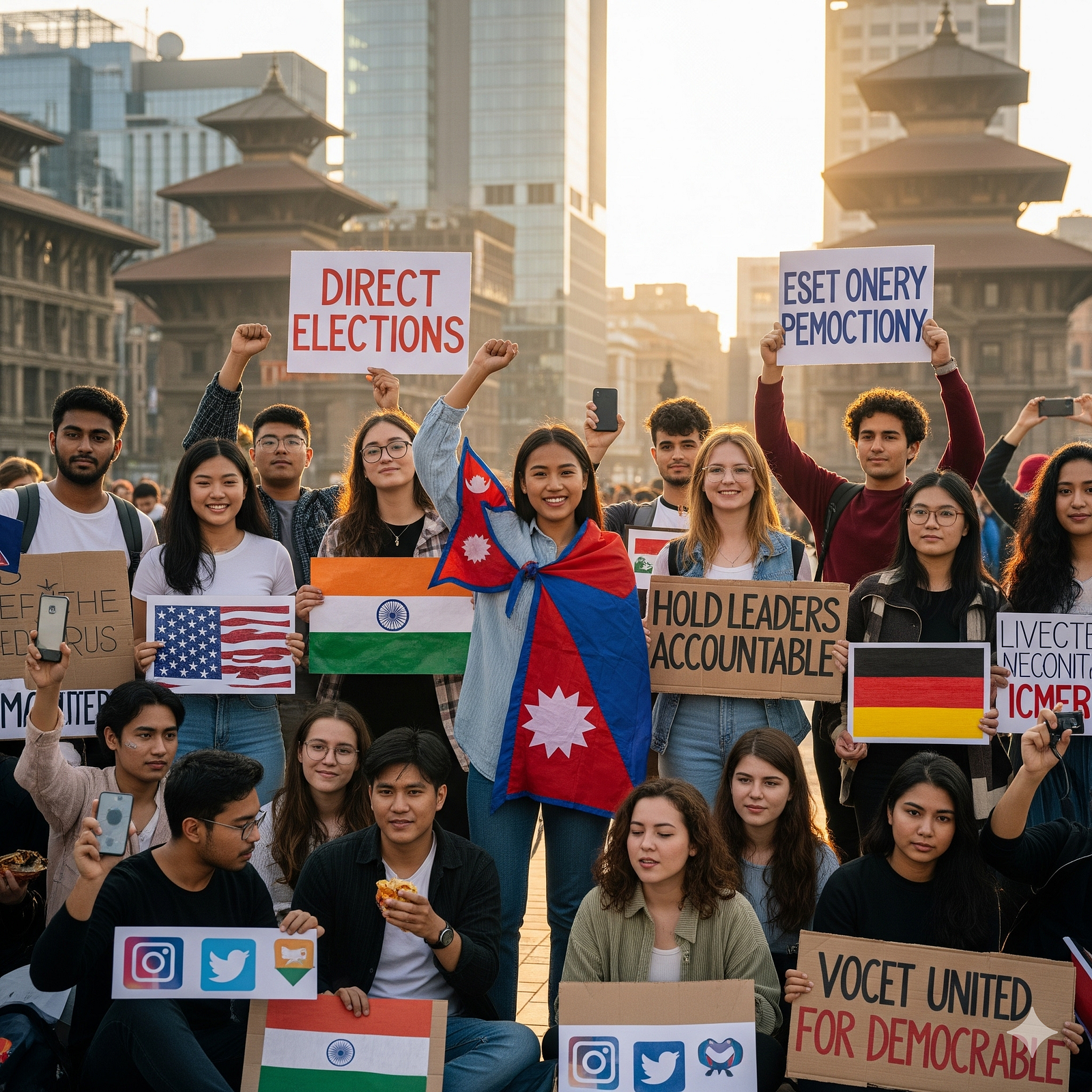
🇳🇵 Nepal — Our Fight for Real Democracy

Nepal isn’t just watching this global revolution — WE’RE PART OF IT! Our reasons are just as valid and our fight just as important:

What We’re Fighting For:

  • Direct Elections: We want to choose our Prime Minister directly, not through politician deals
  • Stable Government: Tired of PMs changing every 6 months while nothing gets done
  • Real Leaders: People like Sudhan Gurung, Balendra Shah, Sagar Dhakal (MIRAJ DHUNGANA ‘Revolution starter’)who understand our problems
  • Youth Power: GenZ Nepal demanding our voices be heard NOW, not “when you’re older”

Why Our Movement is Fair:

  • We want competent leaders, not connected ones
  • We want development, not empty promises
  • We want a government that serves 4 years and actually completes projects
  • We want leaders chosen by people, not by backroom politics

The “Hami Nepal/GenZ” Revolution:

This isn’t just politics — this is young Nepal saying “We’re done waiting for change. We ARE the change.”

THE AMAZING PART: PROTESTS ARE ACTUALLY WINNING!

Here’s the most important part — these protests are getting real results! People often ask “Do protests actually work?” The answer is YES!

Big Victories in 2024–2025:

🇧🇩 Bangladesh — COMPLETE VICTORY:

  • What happened: Large-scale protests aimed at systemic change ousted an undemocratic government in Bangladesh
  • Result: The corrupt government was completely removed!
  • Lesson: When people unite, they can remove entire governments

🇺🇸 United States — Legal Victories:

  • What happened: After protests, a judge ruled the Trump administration violated law and ordered them to stop using military for civilian law enforcement
  • Result: Government was legally forced to change their actions
  • Lesson: Protests can lead to court victories that protect people’s rights

Ongoing Fights That Are Making Progress:

🇬🇪 Georgia: 36+ days of protests are putting massive pressure on government 🇷🇸 Serbia: Student protests are forcing discussions about corruption and accountability 🇬🇧 UK: Worker strikes are forcing better pay negotiations 🇪🇺 Europe: Farmer protests are forcing policy changes

Why This Time is Different — And Why You Should Be Excited

1. Global Connection = More Power

When people in Nepal see success in Bangladesh, they think “If they can do it, so can we!” When Georgia protesters see Nepal’s youth movement, they get inspired too. Result: Ideas, tactics, and hope spread instantly across the world.

2. Young People Leading = Fresh Energy

This isn’t your parents’ generation of protests. This is:

  • GenZ using TikTok/Facebook/X/Youtube to organize
  • Students fact-checking politicians in real-time
  • Young people who refuse to accept “that’s just how things are”

3. Clear, Simple Demands

Previous generations had complicated ideological fights. Today’s movements want simple, fair things:

  • Stop stealing our money
  • Let us vote for our leaders
  • Treat workers fairly
  • Hold corrupt people accountable

4. Technology Making Change Faster

  • Information spreads instantly
  • Corruption gets exposed immediately
  • International support arrives quickly
  • Success stories inspire globally

The Numbers Don’t Lie — This is HUGE

  • Over 147 countries with significant protests
  • 700+ major anti-government protests worldwide
  • More than 160 significant anti-government protests erupted just in 2024
  • 18,000+ demonstrations in the US alone

Translation: This isn’t just “some protests” — this is a global revolution happening right now!

What This Means for You (Why You Should Care and Act)

You’re Not Alone

If you feel frustrated with corruption, unfair economics, or politicians who ignore people — you’re part of a global community of 147+ countries feeling the same way!

Change is Possible

Bangladesh completely changed their government. Courts are forcing US government to follow law. European farmers are changing policies. Real change is happening!

Your Voice Matters

Every global movement started with individuals who decided they deserved better. The student in Serbia, the farmer in Europe, the young person in Nepal sharing posts — they all started as “just one person” too.

How You Can Be Part of This Global Revolution

Start Where You Are:

🇳🇵 In Nepal:

  1. Support Direct Elections: Share posts, join discussions, demand accountability
  2. Promote Good Leaders: Talk about leaders like Sudhan Gurung, Balendra Shah, Sagar Dhakal, Miraj Dhungana
  3. Use Social Media: Share success stories from other countries to show change is possible
  4. Join Youth Movements: Connect with “Hami Nepal/GenZ” and similar groups

Globally:

  1. Share International Stories: When protesters win in one country, share their success
  2. Learn from Other Movements: See what tactics work elsewhere
  3. Build Solidarity: Support fair movements in other countries
  4. Stay Informed: Follow global protest news to understand patterns

Simple Actions That Actually Matter:

  • Share this post — Information is power
  • Comment on political posts — Your opinion influences others
  • Attend peaceful rallies — Show up when fair causes need support
  • Vote in every election — Use whatever democratic power you have
  • Talk to family/friends — Personal conversations change minds

What Happens Next — The Future We’re Building

Based on current global trends, here’s what we can expect:

Short Term (Next 1–2 years):

  • More governments will be forced to respond to protest demands
  • Young leaders will start winning elections globally
  • Direct democracy movements will grow stronger
  • International cooperation between movements will increase

Medium Term (3–5 years):

  • Countries with successful movements will inspire others
  • New generation of leaders will take power
  • Economic policies will become more fair due to pressure
  • Technology will make governments more accountable

Long Term (4+ years):

  • Global shift toward more responsive democracy
  • Youth voice becoming normal part of politics
  • Corruption becoming much harder to hide
  • International movement supporting fair governance everywhere

The Nepal Vision — What We Can Achieve

If Nepal’s youth movement succeeds (and global trends suggest it will), imagine:

  • Stable 4-year governments that actually complete projects
  • Leaders chosen by people, not by politician deals
  • Young voices in every major decision
  • Corruption becoming rare because everyone’s watching
  • Economic policies that help regular people, not just rich ones
  • International respect as a model democracy for other developing countries

Call to Action — The Time is NOW

This isn’t just about reading and thinking — this is about acting. Here’s what you can do TODAY:

Immediate Actions

  1. Share this post with 3 people who care about change
  2. Follow movements in Nepal and globally on social media
  3. Join one local group working for fair causes
  4. Comment on political posts with facts and hope
  5. Attend one event supporting fair causes
  6. Have one conversation with family/friends about these issues
  7. Research one international movement to learn tactics
  8. Post one thing on social media supporting positive change
  9. Connect with other young people who want change
  10. Learn about direct democracy and how it works
  11. Support good leaders however you can
  12. Build bridges with similar movements in other countries

Final Message — This is Your Moment

History is being written right now. In 20 years, when your children ask “What did you do during the great global revolution for democracy?”, what will you tell them?

Will you say “I watched from the sidelines” or will you say “I was part of the movement that changed everything”?

The revolution isn’t coming — it’s here. Change isn’t possible — it’s happening. Your voice doesn’t matter — it’s part of a global chorus demanding justice.

From Nepal to Georgia, from Serbia to Bangladesh, from Indonesia to the UK — ordinary people are achieving extraordinary things because they decided they deserved better and they were willing to work for it.

Nepal’s youth revolution isn’t separate from the global movement — we ARE the global movement.

The question isn’t whether change will come. The question is: Will you be part of making it happen?

What are you waiting for?


This is the moment when history changes direction. This is the moment when the impossible becomes inevitable. This is the moment when your voice joins millions of others saying “We deserve better, and we’re not backing down.”

The global revolution needs you. Nepal needs you. The future needs you.

Are you ready?